
Radiation protection you can actually prove
NZRad Solutions screens lead aprons, gowns and thyroid collars with the FlowD 8020, the worlds first patented and Standards approved, non-contact X-ray inspection system that finds the cracks, lead thinning and holes a visual check can miss, and gives you a documented and quantifiable result for every garment you own.
See How The FlowD Works

The problem
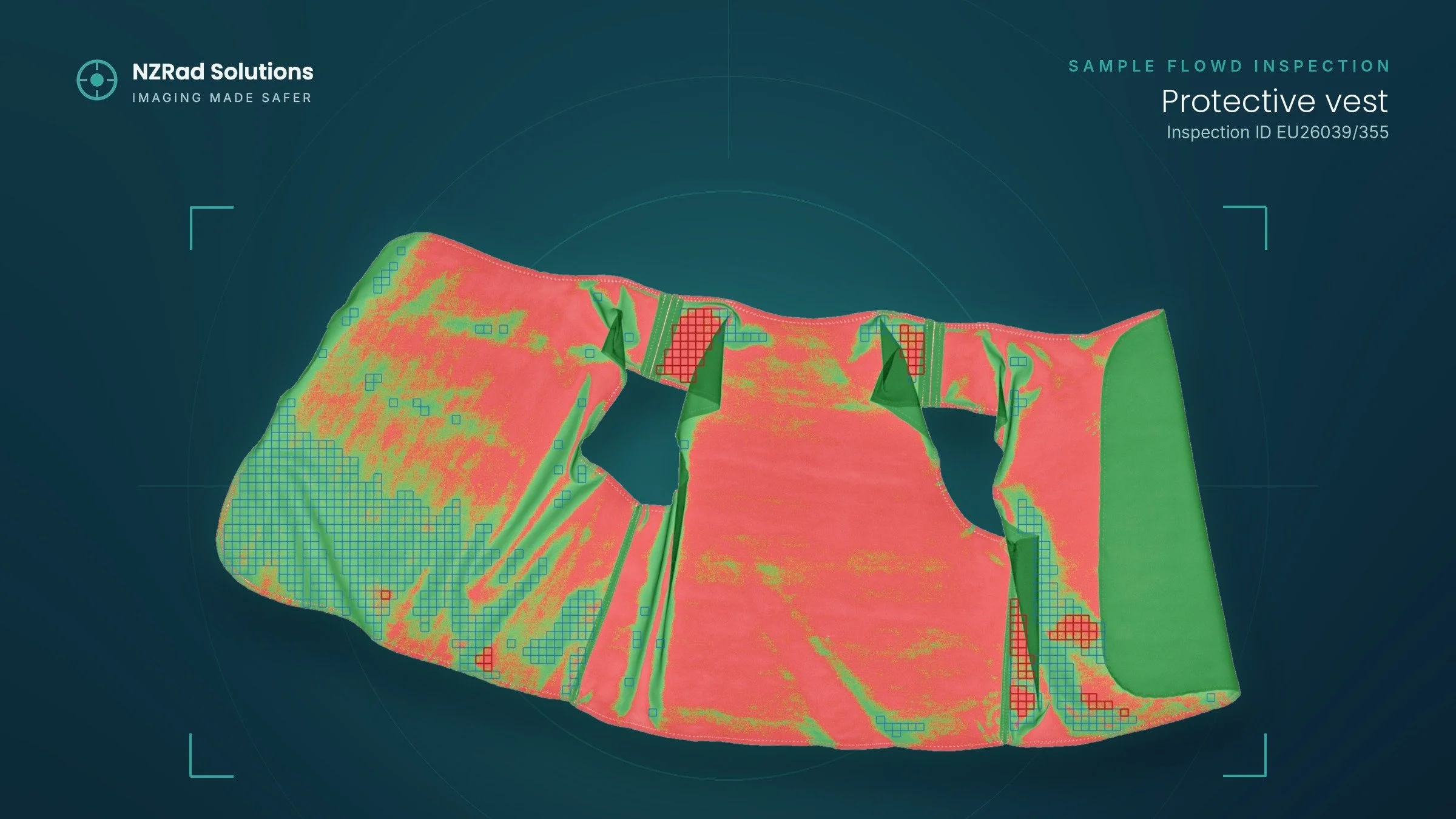
Actual PPE Vest that was in service, screened using the FlowD system showing lead equivalent thinning, measured at 0.14mm compared to the CE label showing 0.25mm. RED indicates areas greater than 10% under the minimum 0.25mm lead equivalent thickness on this vest. This equates to a 44% thinning of this non lead item.
Damage inside a lead garment can't be seen from the outside
Protective garments are folded, hung on hooks and worn for long lists every day. Over time the shielding inside cracks and thins while the fabric cover still looks fine. Gowns screened every year may still pass traditional screening.
However- Xray screening of Gowns can NOT see lead thinning. which means staff can potentially still be exposed to ionising radiation without anyone knowing.
All the while, gowns are still passing traditional testing.
Traditional screening takes clinical X-Ray systems and staff away from the clinical environment, costing valuable time, patient treatment capacity and increased radiation exposure to the staff screening the gowns.
Hidden cracks and holes
Folding and hanging stresses the lead or composite core , creating gaps that let radiation through exactly where staff assume they are covered.
This can be seen on traditional X-Ray screening depending on size and system used.
No evidence on file
Without a documented screening record for each garment it is very hard to show an auditor, a regulator or your own staff that your protection actually works.
No quantifiable date and few if any images are ever stored during traditional screening
Thinning and wear
Shielding can lose lead equivalence gradually, so a garment that passed when it was new, may no longer meet the protection level it is labelled with.
This CAN NOT be seen with traditional Screening
Internationally validated Results
Global Concern Emerging
THE EVIDENCE
Around 30% of the gowns we screened at independent New Zealand sites showed significant lead thinning past the ISO rejection criteria for the Gowns advertised lead thickness.
~31%
Around half of the thyroid collars we screened at independent New Zealand sites showed significant lead thinning greater than 10% degradation,
~50%
Around 9% of NEW gowns or gowns less than 12 months old showed signs of degradation well past the manufacturing and CE labelled lead thickness.
~9%
How It Works
From booking to a documented result for every garment
01
Book your screening
We agree a time that suits your lists, either on site in an evening session or with an overnight or weekend collection. Then we collate your inventory list and locations. Finally, we work with your RSO and medical physicist to determine the accept/quarantine guidelines to ensure a quantifiable report flags any gowns for further analysis.
02
We scan with FlowD
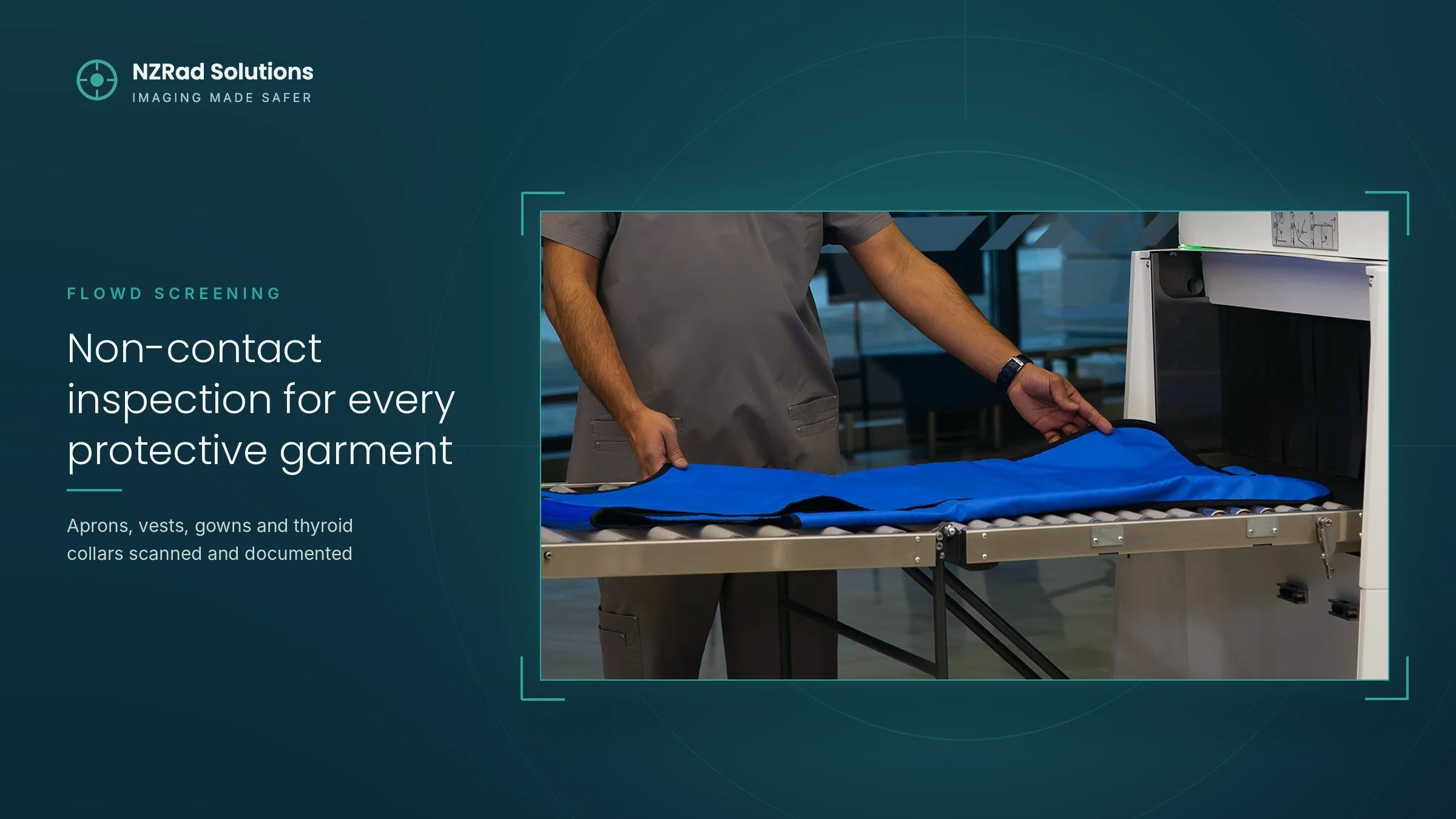
Each garment passes through the FlowD scanner, which images the whole shielding layer without touching or damaging it.
Either we can Scan the entire Inventory for you, or you can elect to use your own staff to complete the screening*.
03
You get the report
A clear and quantifiable report of total Gown Integrity for every item, with scan images and the defects marked, ready to file as compliance evidence, put back in service, move and quarantine for further analysis or flag for replacement. You retain control of the decisions around your Gowns.
04
Replace with confidence
Only the garments that genuinely need retiring are replaced, and we set a rescreen date so your register stays current. Evry gowns unique serial number is stored logged and available for the lifespan of the garment.
Services to Suit Your World
Screening that fits the way your service runs
Department screening
Full inventory screening for radiology, cardiology, theatres and private imaging providers, on site or off site.
Individual clinician PPE
Own your own apron, gown or collar? We screen personal garments for individual clinicians on request. Either Pick up and drop off- or on site.
Bring Your Own Technician
Large hospital groups can lease FlowD and run screening in house with their own trained* staff, at a lower daily rate.
Why It Matters
Safety
Lead gowns, especially the newer “non lead” gowns have been to show accelerated degradation. Staff safety relies on a comprehensive radiation safety plan, and your Lead gowns represent a vital part of that protection.
Quantitative and proactive management and screening provide confidence and safety for your staff, and show that your PPE still meets recognised standards such as IEC AS/NZS ISO 61331 and DIN 6857-2.
You remove your staff from potential exposure in the actual screening process itself -completely.
Compliance protects capacity
Quantitative and proactive management and screening keeps your most valuable resources,-your staff- available to care for patients, and keeps your Diagnostic equipment doing what it was designed to do.
The average department could return well over 100 patient facing examinations by taking the screening out of the clinical environment.
Sustainability
Gowns and X-Ray PPE are expensive parts of your department or practice. The ability to quantifiably inspect every item to a known standard and quality, compare inventory age, use , brands and all measurable information, provides a powerful tool to proactively manage your Inventory repalcement plan and budget.
Gowns previously removed from service in some cases can be returned to service if they are found to be meeting safety standards.
Your staff are your most valuable resource- Using the FlowD releases up to 90% more time back to the clinical envirnoment and into staff wellbeing programs, not countless hours screeing xray gowns.